
Dog odor: protein-based
Dog odor comes from proteins, oils, and bacteria, and lives on fur, skin, and the surfaces where dogs spend time, including beds, carpets, furniture, and blankets. Dog urine is another potential source, as it can saturate contaminated areas and create a deeply embedded odor.
Common dog odors are generally more responsive to cleaning and odor elimination when treated properly. They can build up over time, especially in high-traffic areas, but the right product addresses them at the source
Cat odor: crystalline
Cat odor, and cat urine in particular, is a different problem entirely. Cat odor contains uric acid, which forms crystals that bond tightly to surfaces. Unlike protein-based odors, those crystals don't break down easily and may remain dormant even after cleaning.
This is why cat odor is harder to eliminate and the most common source of recurring odor complaints. The smell can embed in carpet padding, subfloors, wood, and fabric. Once it's there, it stays.
Why does odor come back?
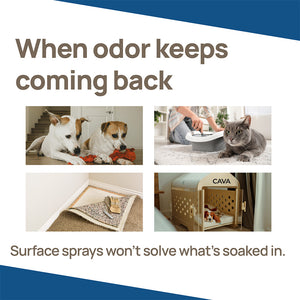
People often come to Odorcide after they've "tried everything else." We hear it all the time: Pet owners clean an area, the smell goes away briefly, then it comes back, sometimes stronger than before.
Other products, such as enzyme-based cleaners, disturb odor molecules without neutralizing them. Others only partially break down the source, releasing or spreading odor compounds without eliminating them. In either case, the solution either failed or made the problem worse.
Why a non-enzymatic approach matters
Enzymatic solutions rely on specific conditions and precise application, and results vary. A non-enzymatic approach removes that variability by directly bonding to odor molecules and neutralizing them at the source, without depending on temperature, humidity, or dwell time, delivering a more consistent result every time.
What this means for you
Whether you're dealing with dog smell that's built up over years or cat odor that keeps coming back no matter what you try, the key isn't just what product you use. It's whether it addresses the specific chemistry of the odor you're dealing with. It's time to stop chasing the smell.
Here are the solutions we recommend:
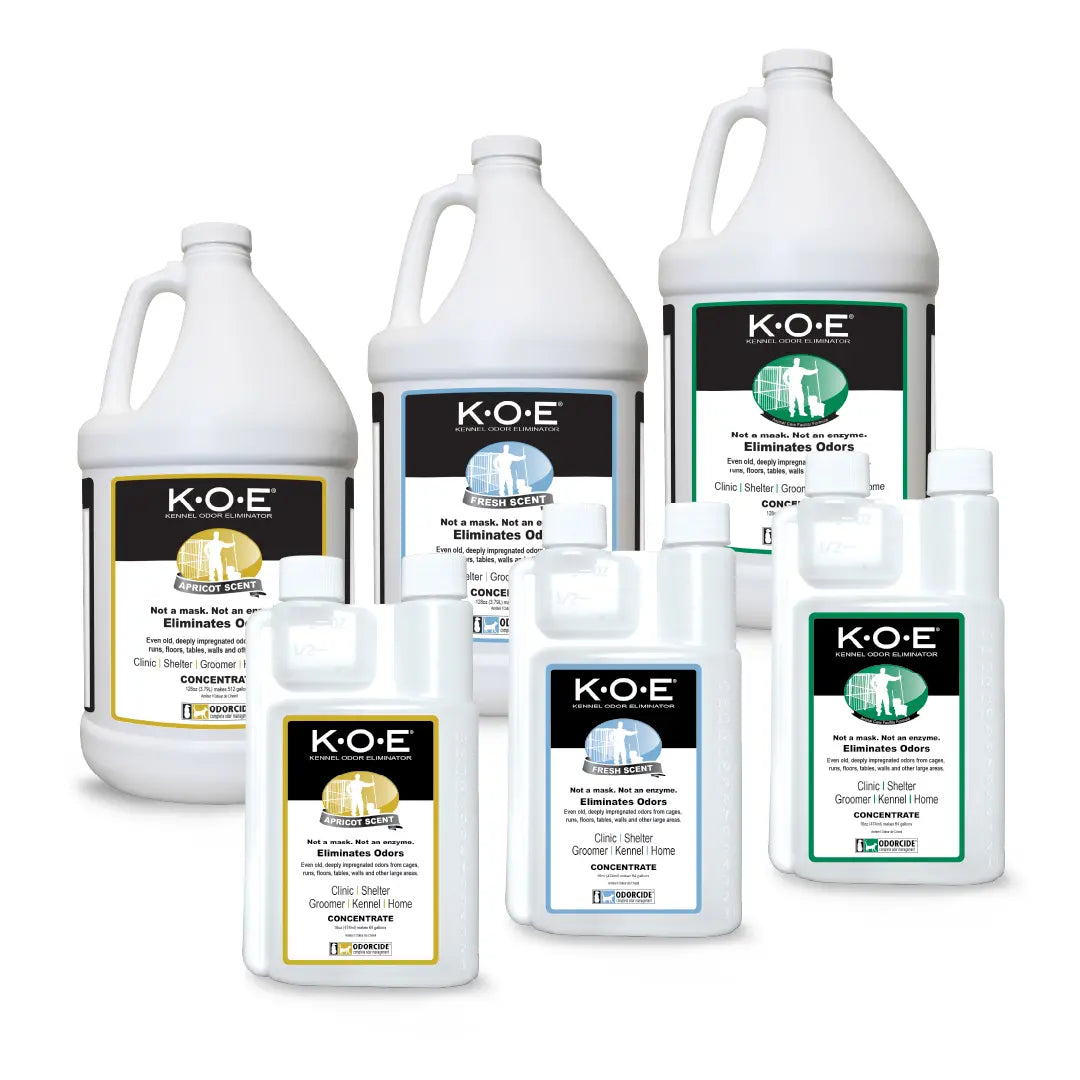
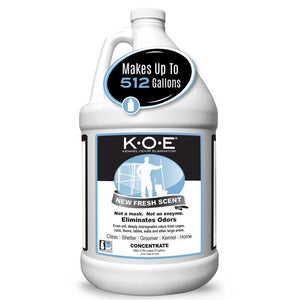
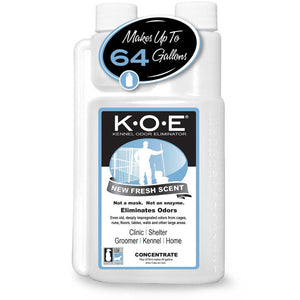
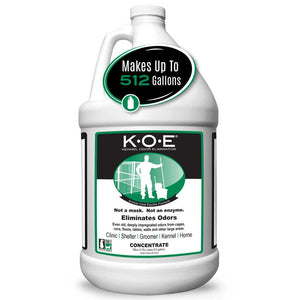
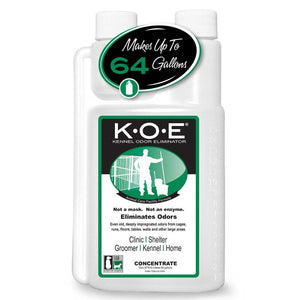
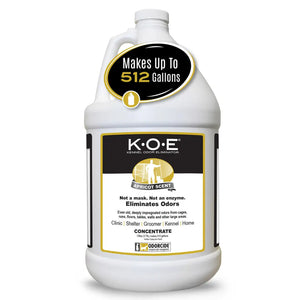
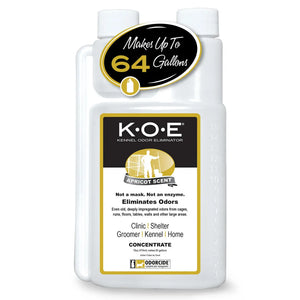
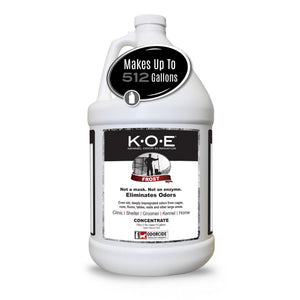
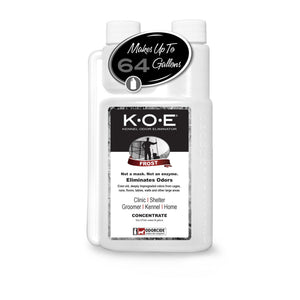
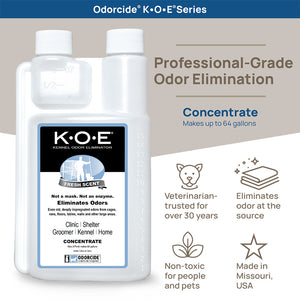
Kennel Odor Eliminator (K.O.E.)
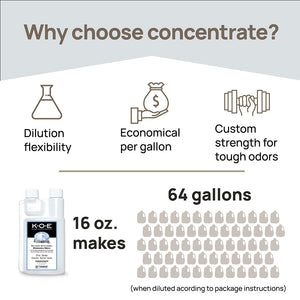
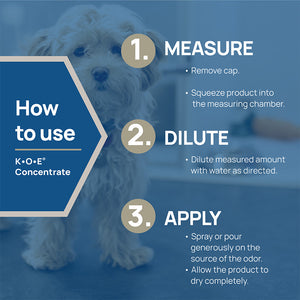
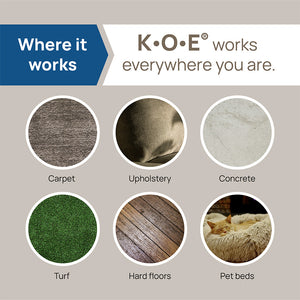
Add K.O.E. directly to your cleaning solution to permanently eliminate odors at the molecular level every time you clean. Effective on contact, it neutralizes even the toughest embedded odors, dog or cat, without interfering with disinfectants.
Animal Odor Eliminator (A.O.E.)
A.O.E. comes in a spray and a wipe for use directly on animals. It eliminates odor on contact rather than masking it, leaving pets smelling clean without harsh chemicals or heavy fragrance, and it works on dogs and cats alike.
Cat Attack is engineered specifically for cat urine, the most chemically persistent pet odor. It permeates deeply into carpet fibers and subflooring to neutralize uric acid crystals at the source, delivering results where enzyme-based products fail.
Cat Odor-Off brings the same science veterinarians trust into a consumer-friendly format, formulated for regular use, including spot treatment, surface application, and routine odor maintenance, without the volume of professional concentrates.
Dog Odor-Off (hyperlink) Dog Odor-Off uses the same approach to protein-based dog odors, delivering consistent results on beds, carpets, and surfaces where dogs spend the most time.