
Enzyme cleaners have dominated the pet aisle for years, and chances are, as a consumer, you had no idea.
Enzymes are not the only way to eliminate pet odor. They are not automatically the right choice for every environment.
“Natural” Does Not Mean Neutral
Enzymes are biological catalysts that help break down organic material. Pet cleaners commonly use them to target substances found in urine, feces, vomit and other biological messes.
That can be effective under the right conditions. The word “enzyme,” however, has also become shorthand for natural, gentle and universally safe.
The National Institute for Occupational Safety and Health lists subtilisins, a class of protease enzymes long used in detergent products, in its Pocket Guide to Chemical Hazards. Respiratory sensitization, or “enzyme asthma,” is listed as a known health effect of exposure. A 2011 case series published in Occupational Medicine documented cases of occupational asthma and rhinitis among healthcare workers exposed to detergent enzymes and concluded that the enzymes should be recognized as potential respiratory sensitizers in clinical settings.
That does not prove that properly used household enzyme cleaners cause allergic disease in pets. The research largely involves concentrated workplace exposure, particularly airborne enzyme dust.
The findings do establish something more basic: enzymes are biologically active substances with documented sensitization potential under certain exposure conditions. They should not automatically be treated as chemically neutral simply because they are biological.
Pets Live Closer to the Products We Use
Exposure is the bigger issue.
Dogs and cats do not simply walk across cleaned surfaces. They lie on them. They lick their paws after touching them. They sleep on treated rugs and upholstery. They eat from floors and spend much of their lives close to the ground.
A 2026 review published in the American Journal of Veterinary Research by Dr. Rosanna Marsella, a veterinary dermatologist at the University of Florida College of Veterinary Medicine, examined environmental and lifestyle factors associated with allergic disease in dogs. The review considered the growing relevance of indoor environmental exposures, including household cleaners and chemicals, as pets spend more of their lives inside the home.
The review did not identify enzyme cleaners as a proven cause of pet allergies. It did reinforce the importance of looking more carefully at the substances pets repeatedly encounter inside the home.
The question is not whether every household cleaning product is dangerous. The question is whether “non-toxic” should be the only standard when pets may encounter a product repeatedly on the surfaces where they eat, sleep and play.
Performance Is Not Exclusive to Enzymes
Enzyme cleaners have also benefited from the assumption that biological odor requires a biological solution.
That does not make every non-enzyme cleaner better.
It does make one point clear: consumers do not have to choose an enzyme formula to get serious odor performance.
How Enzyme Cleaners Work
Enzymatic products are designed to break down specific organic substances. The product must reach the entire odor source and remain under conditions that allow the enzymes to function.
That can be harder than it sounds.
Pet urine frequently travels below the visible surface into carpet backing, padding, subfloors, upholstery or porous materials. Treating only the area that can be seen may leave part of the odor source untouched, regardless of the product being used.
Temperature, pH and previous cleaning products may also affect enzymes. Product directions frequently require adequate saturation and a specific contact period.
Spraying the top of a stain and wiping it away immediately may not solve the underlying problem.
The Enzyme-Free Alternative
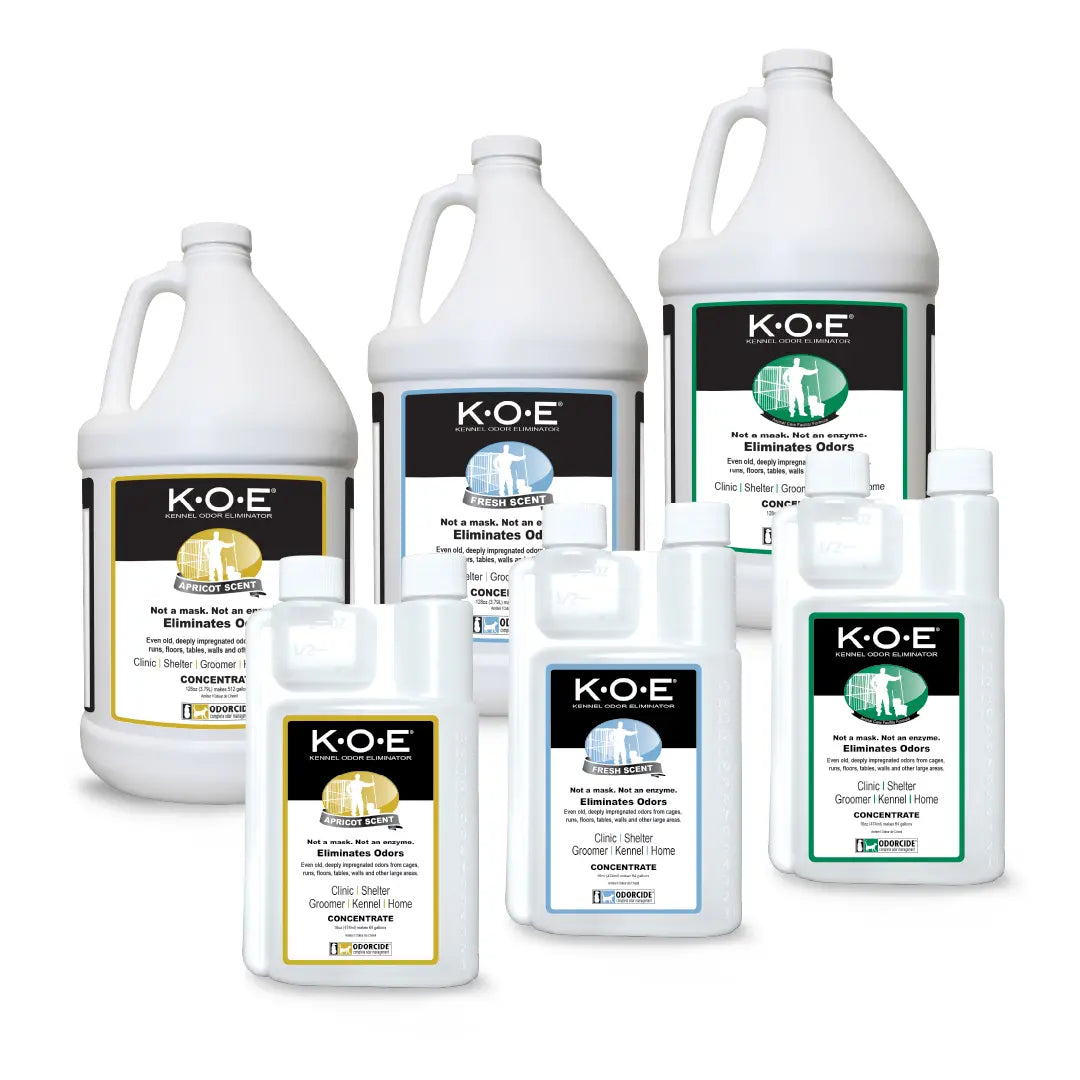
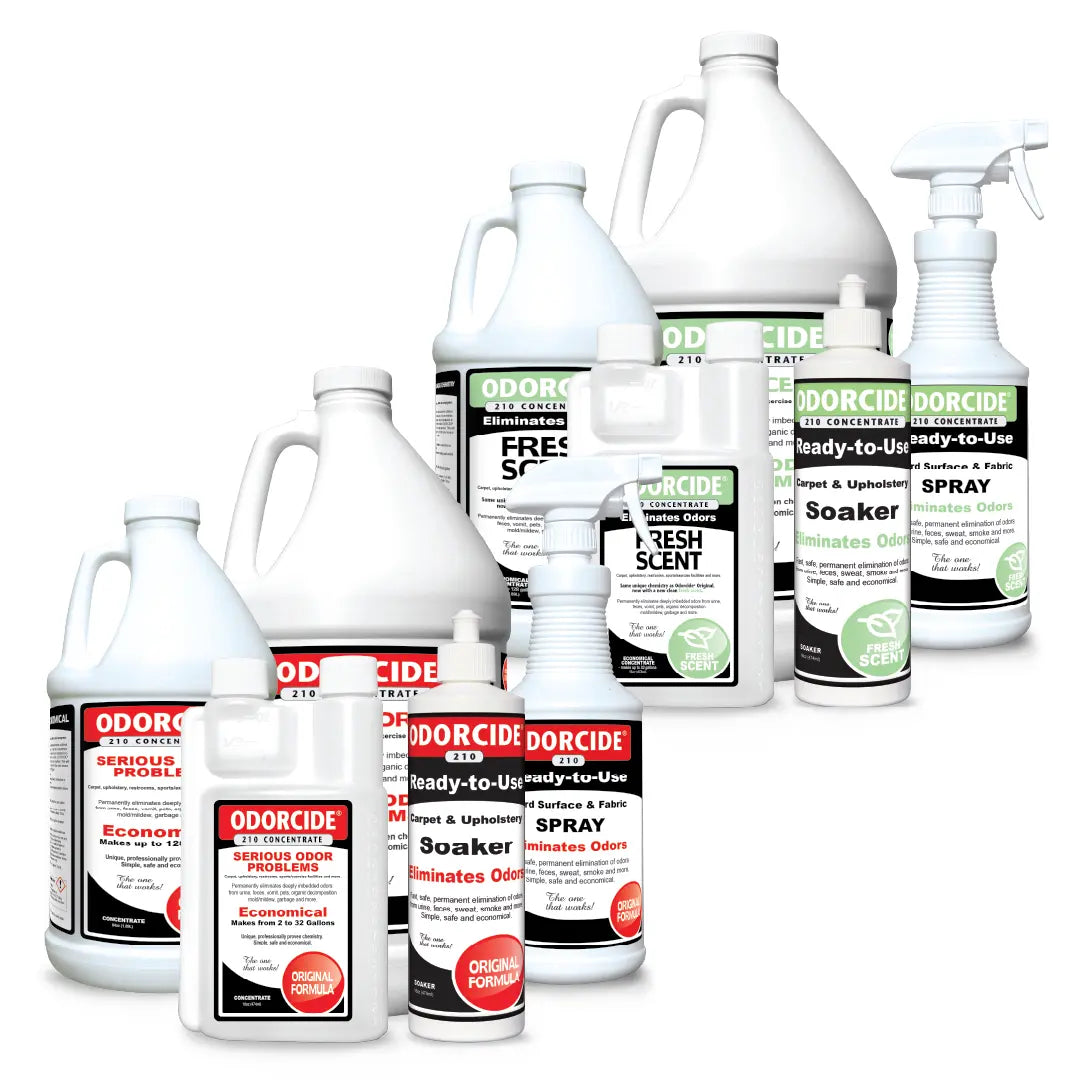
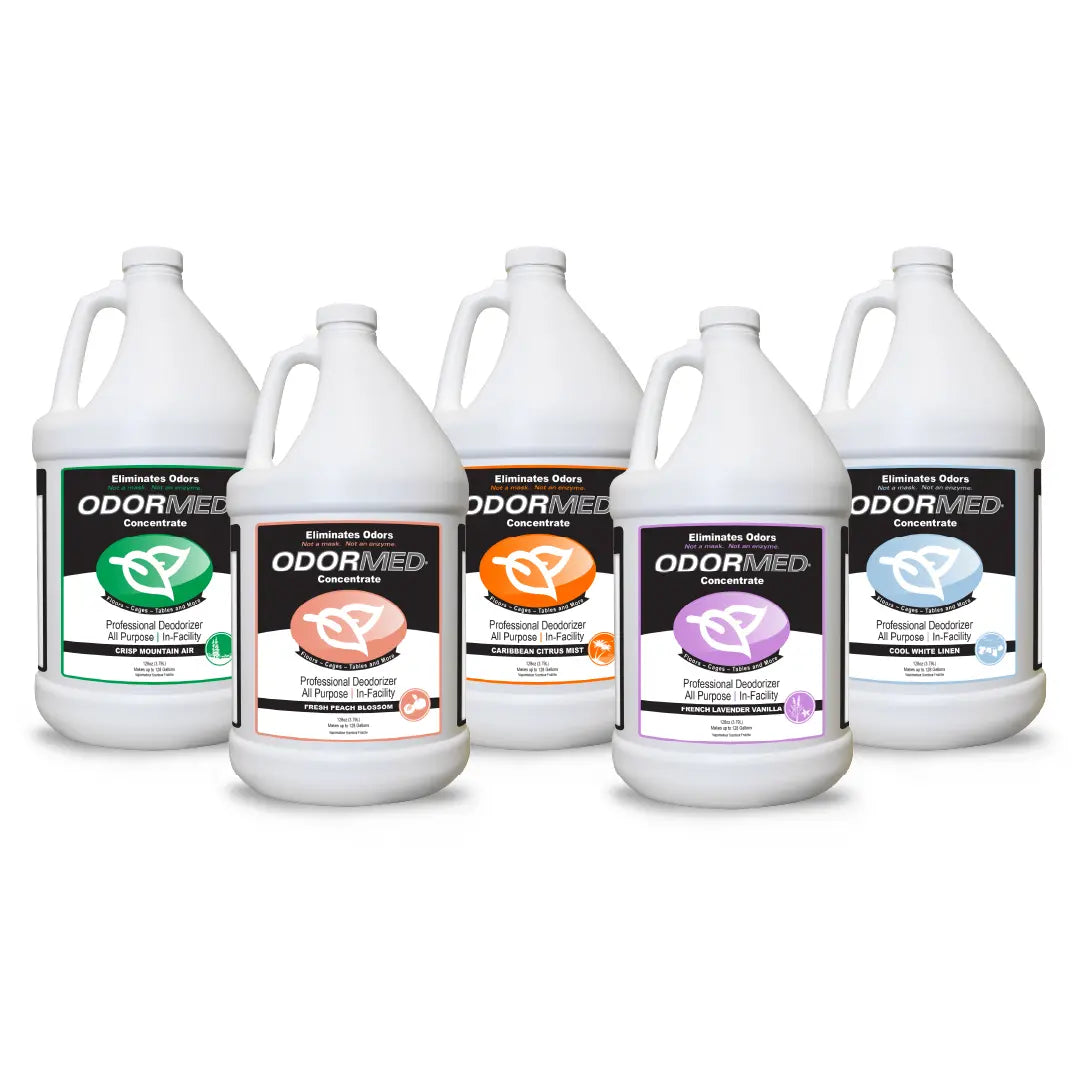
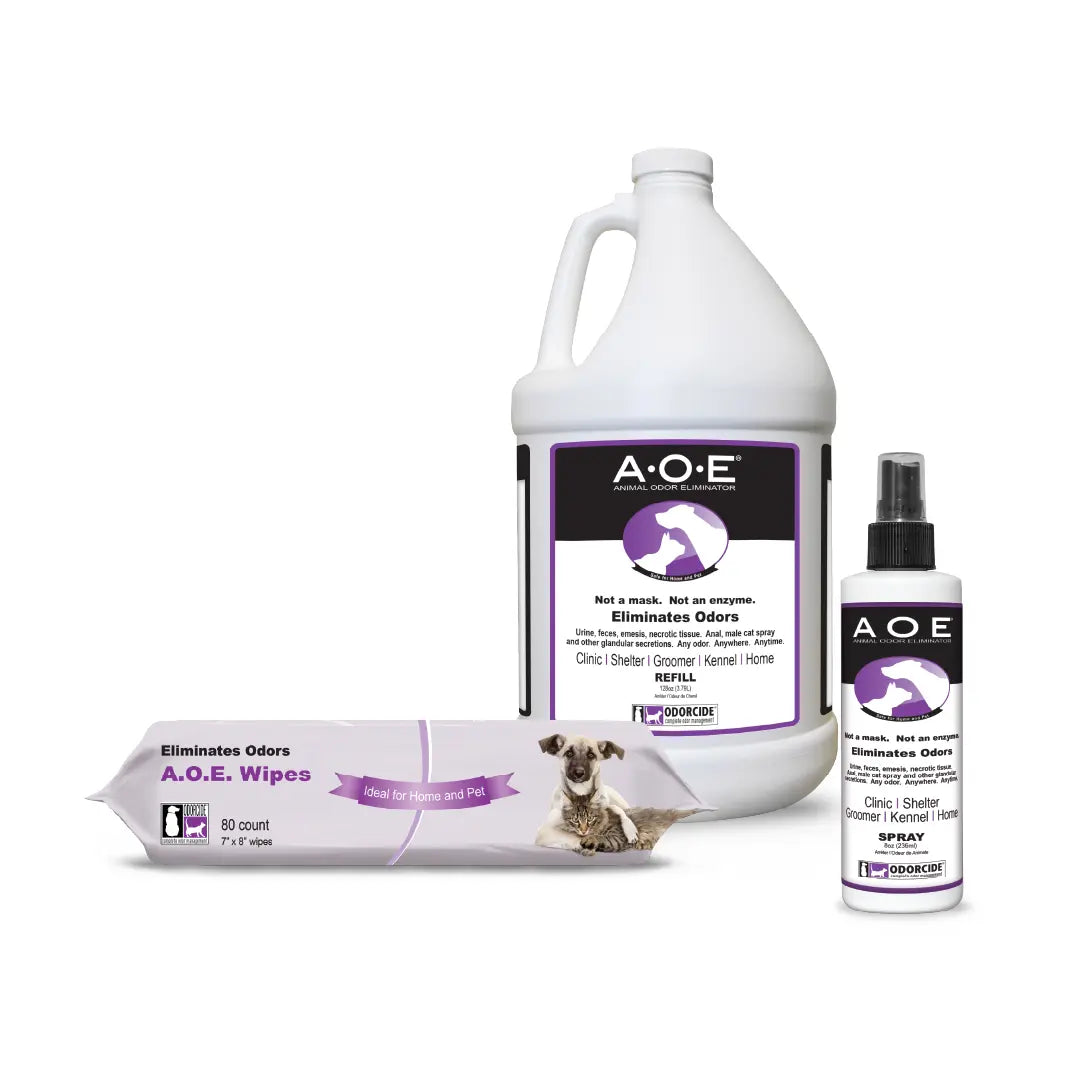
Odorcide takes a different approach.
Its formulas do not depend on enzymes to digest organic material. Odorcide’s technical documentation states that the products use processes including counteraction, absorption and molecular bonding to neutralize odor-causing compounds.
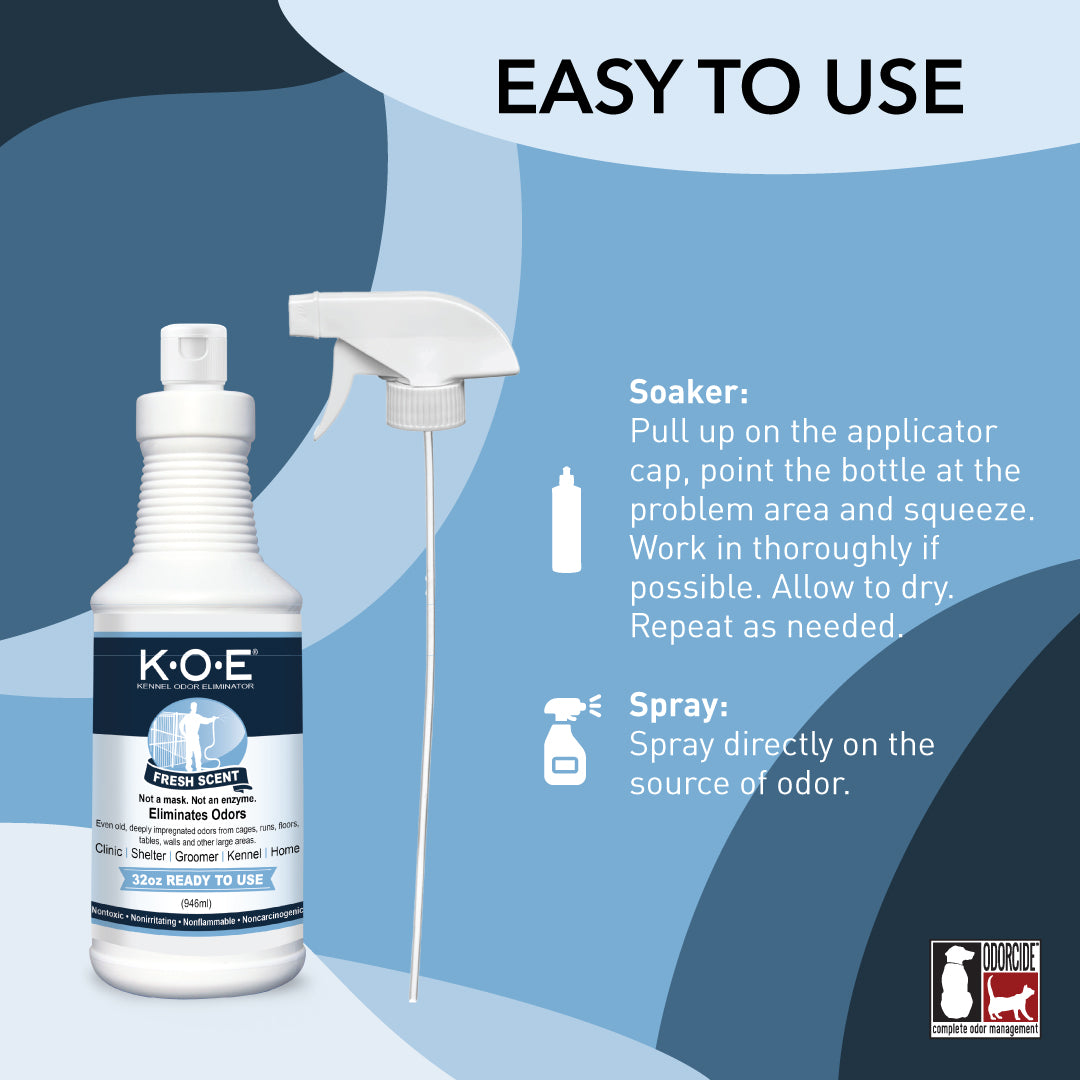
The formula is designed to make direct contact with the odor source and neutralize the compounds producing the smell rather than waiting for a biological process to break down one particular type of material. Many of the Odorcide ready-to-use products come with a soaker cap. This allows for more saturation during application, which helps Odorcide get deeper into the carpeting and pad to reach the odor source.
That distinction gives Odorcide several practical advantages:
It is not limited to biological odors. The same core odor-elimination approach can be used for pet accidents, smoke, mildew and other difficult odors.
It does not depend on enzyme or bacterial activity. The formula does not require conditions that allow a biological process to continue working over time.
It is used in professional environments. Odorcide products are used in veterinary clinics, kennels, grooming facilities, professional cleaning operations and homes where odor control is an ongoing requirement, not an occasional inconvenience.
Most importantly, it gives pet owners and professionals another option.
Choose the Chemistry, Not the Category
Enzyme cleaners are not inherently bad. Used according to their labels, they may work well for certain organic stains and odors.
They are not the only legitimate answer.
“Enzymatic” does not automatically mean safer.
“Biological” does not automatically mean gentler.
“Natural” does not guarantee better performance.
The best odor product is the one that can reach the entire source, work under the conditions where it is being applied and eliminate the odor rather than temporarily covering it.
Pet owners, veterinarians, and pet care professionals should look past the familiar claims on the front of the bottle and ask a better question:
How does this product actually work?
Sources
Centers for Disease Control and Prevention, National Institute for Occupational Safety and Health. “NIOSH Pocket Guide to Chemical Hazards: Subtilisins.”
https://www.cdc.gov/niosh/npg/npgd0572.html
Adisesh A, Murphy E, Barber CM, Ayres JG. “Occupational asthma and rhinitis due to detergent enzymes in healthcare.” Occupational Medicine. 2011;61(5):364–369.
https://doi.org/10.1093/occmed/kqr107
Marsella R. “Theories and mechanisms of environmental factors that cause allergies in dogs: veterinarian involvement in lifestyle choices to support long-term well-being.” American Journal of Veterinary Research. 2026;87(1).
https://doi.org/10.2460/ajvr.25.07.0275