
A few weeks ago, I asked an AI platform a question that our customers ask us all the time.
"How do I get this stubborn smell out of my carpet?"
The recommendation was an enzyme cleaner, accompanied by a fairly standard explanation of how enzymes break down organic matter and eliminate odor at the source.
There was nothing inherently wrong with the answer. What stunned me was how confidently a very complicated topic had been reduced to a single recommendation that, in many cases, simply will not work for the average consumer.
After more than forty years in the odor-management industry, I have been asked how to get rid of every smell under the sun. More than once.
What I tell people is that odor problems rarely present themselves in optimal, controlled conditions. Laboratory evaluations bear little resemblance to what actually exists in a veterinary hospital, an animal shelter, a family home, a healthcare facility, or a restoration project. By the time most people start looking for a solution, the smell has gotten worse or returned. The contamination has often spread well beyond the visible surface, and previous cleaning attempts may have introduced detergents, disinfectants, carpet shampoos, or other household products into the mix.
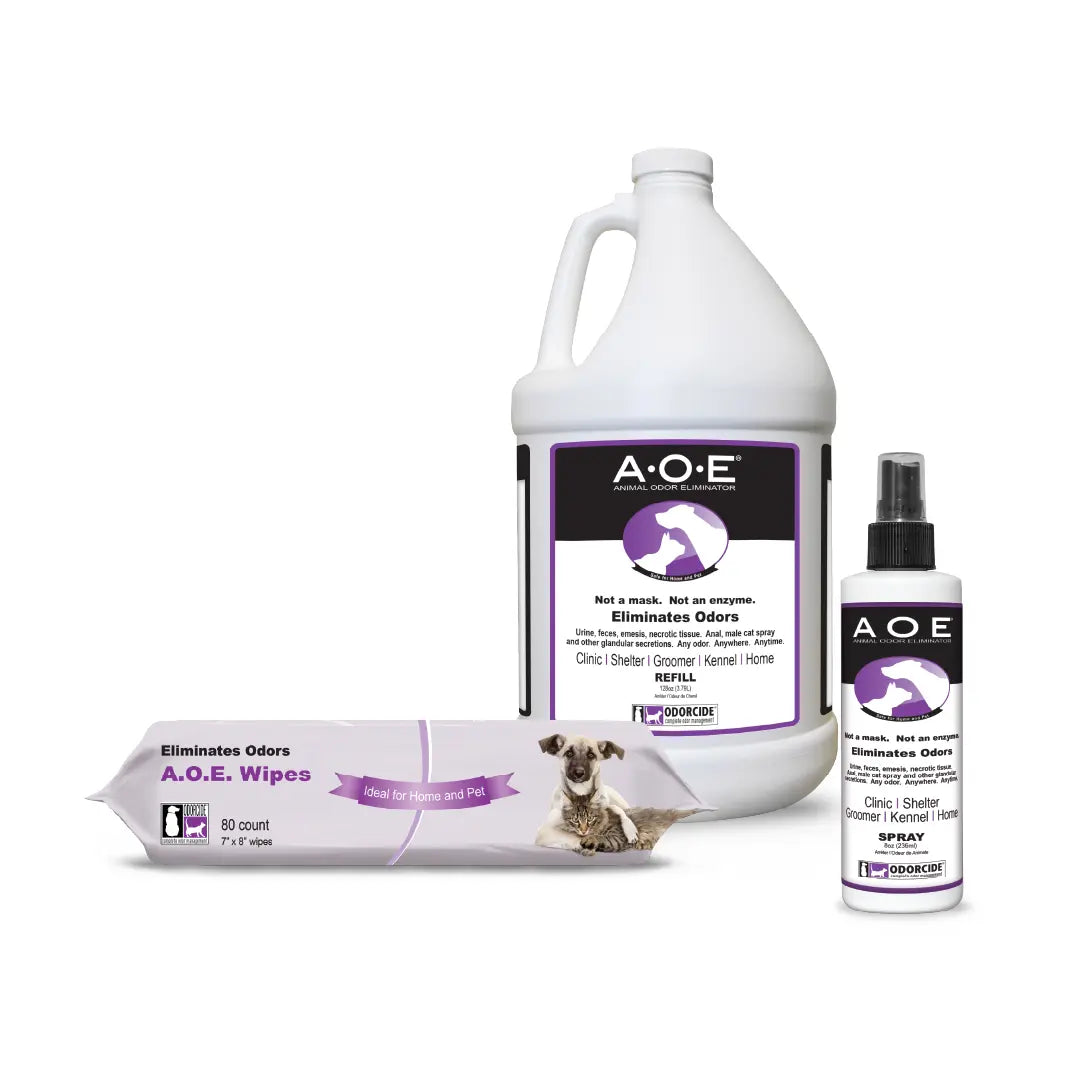
Here's what the AI search wasn't accounting for: moisture levels vary, temperatures vary, and application methods vary. Enzyme performance depends on all three. In tricky conditions, enzymatic cleaners frequently don't work…which is exactly why Odorcide gets so many "I've tried EVERYTHING" calls.
Odor elimination has never been as simple as selecting a product category and expecting the problem to disappear. Every odor has a source, every environment presents its own variables, and every product brings advantages and limitations.
That may not fit neatly into a search result. But it is much closer to the reality that the professionals and customers we talk to encounter every day.